
Snapchat Best Friend Planets Ranking Explained and How It Works
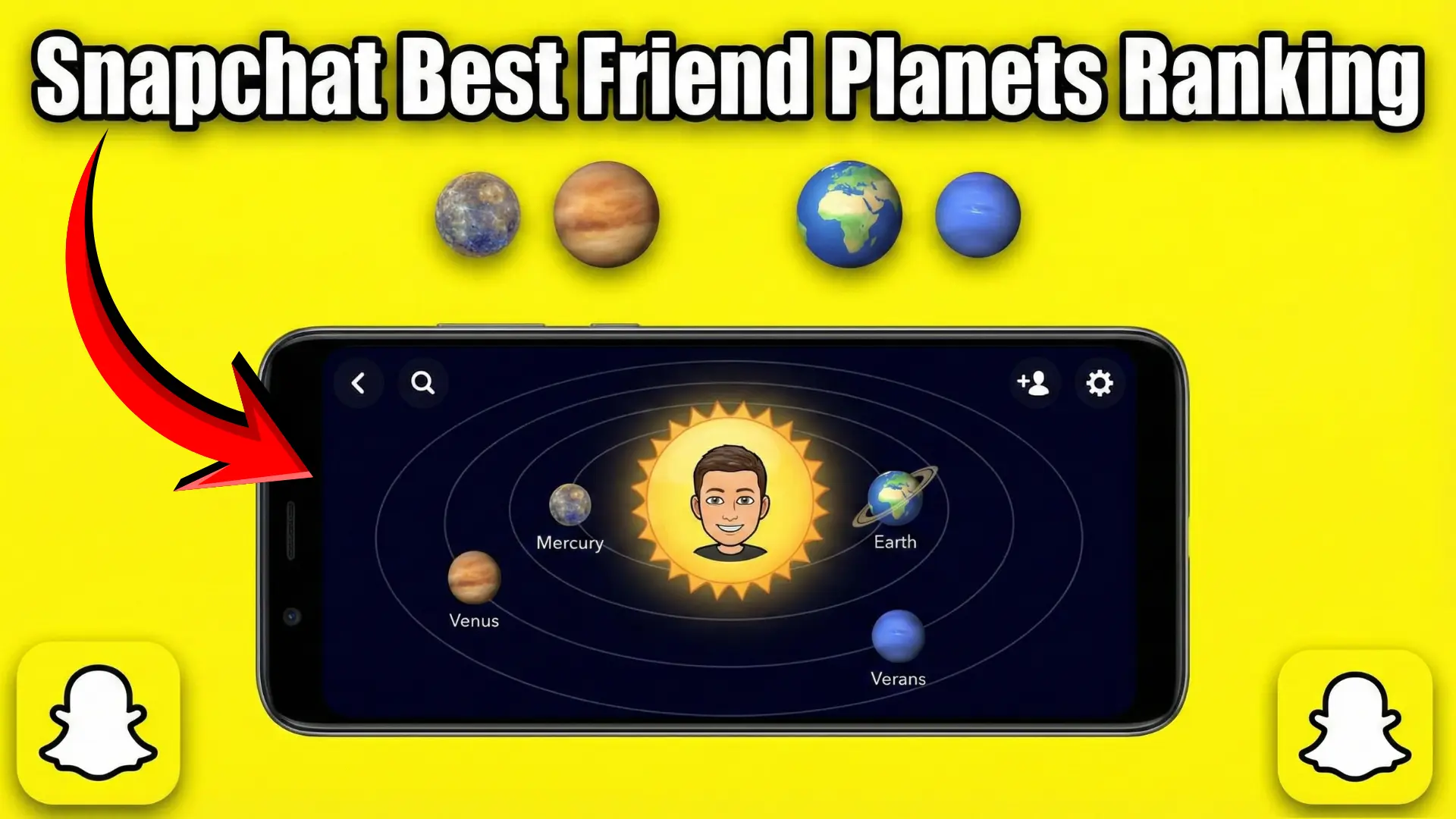
Snapchat Best Friend Planets Ranking is a Snapchat+ feature that visually ranks your top eight friends based on how often you interact through snaps and chats. Instead of a simple list, Snapchat places you at the center as the Sun, with friends represented as planets, from Mercury (the closest) to Neptune (the farthest).
The rankings update automatically based on recent activity, not emotions or streaks. You can enable or disable the feature anytime in Snapchat+ settings, and your full solar system remains private. This guide explains what each planet means, how rankings change, and how the system really works.
Snapchat Best Friend Planets Feature
The Best Friend Planets feature is part of Snapchat+, Snapchat’s premium subscription. It visually ranks your top eight friends based on how often you interact with them.
Instead of numbers, Snapchat uses planets:
- You are the Sun
- Your friends become planets orbiting you
- The closer the planet, the stronger the interaction
This system makes it easy and, honestly, kind of fun to see who you connect with the most.
Who Can Use It?
- Only Snapchat+ subscribers
- The feature is off by default
- You can turn it on or off anytime in settings
Also Read: Does Snapchat Plus Remove Ads? Complete Guide to Snapchat+ Monthly Plan
How Snapchat Calculates Your Planet Rankings
Snapchat does not randomly assign planets. The Snapchat Best Friend Planets Ranking is based on interaction patterns, not feelings or labels.
Here is what counts the most:
- Snaps sent and received
- Chat activity
- Recent engagement
- Story interactions (minor role)
What Matters More Than Streaks
A common myth is that streaks control rankings. They do not. Someone you snap daily, even without a streak, can outrank someone with a long streak but low recent interaction. Recent activity always carries more weight than older engagement.
The Role of the Solar System in Your Friendships
Snapchat uses the solar system idea to make rankings easier to understand.
- You’re the Sun because the ranking is centered on your activity
- Planets closer to you reflect a higher interaction frequency
- Only eight friends appear because Snapchat limits “best friends” to a manageable group
Think of it like your real social life, you might know hundreds of people, but only a few are consistently in touch.
Read More: What Does the Red Heart Mean on Snapchat Plus? Features and How It Works
What Each Planet Represents in the Ranking
Instead of listing planets one by one, Snapchat groups friendships by closeness.
Mercury to Venus: Your Closest Connections
These are the people you interact with the most:
- Daily snaps or chats
- Often close friends, partners, siblings, or roommates
- High consistency over time
If someone is Mercury, they’re currently your most active connection.
Earth and Mars: Consistent but Balanced Friendships
These friends:
- Stay in touch regularly
- May not talk every day
- Often include coworkers, school friends, or friends from different circles
They’re steady, just not constant.
Jupiter to Neptune: Occasional and Long-Distance Friends
These planets represent:
- Less frequent interaction
- Long-distance friends
- Friends, you snap occasionally to keep in touch
They’re still part of your circle, just farther out.
Also Read: Green Dot on Snapchat Meaning (2026): Activity Indicator Explained
Best Friends Badge vs Friends Badge Explained
When viewing a Friendship Profile, you may see one of two badges:
- Best Friends badge: This means you appear in each other’s top eight.
- Friends badge: This means you appear in their top eight, but they don’t appear in yours.
Badges can change as interaction patterns shift, which is completely normal.
Turning the Feature On or Off in Snapchat+
Since the feature is disabled by default, you will need to activate it manually.
How to enable Best Friend Planets:
- Open Snapchat
- Go to Settings
- Tap Snapchat+
- Find Feature Management
- Toggle Friend Solar System on
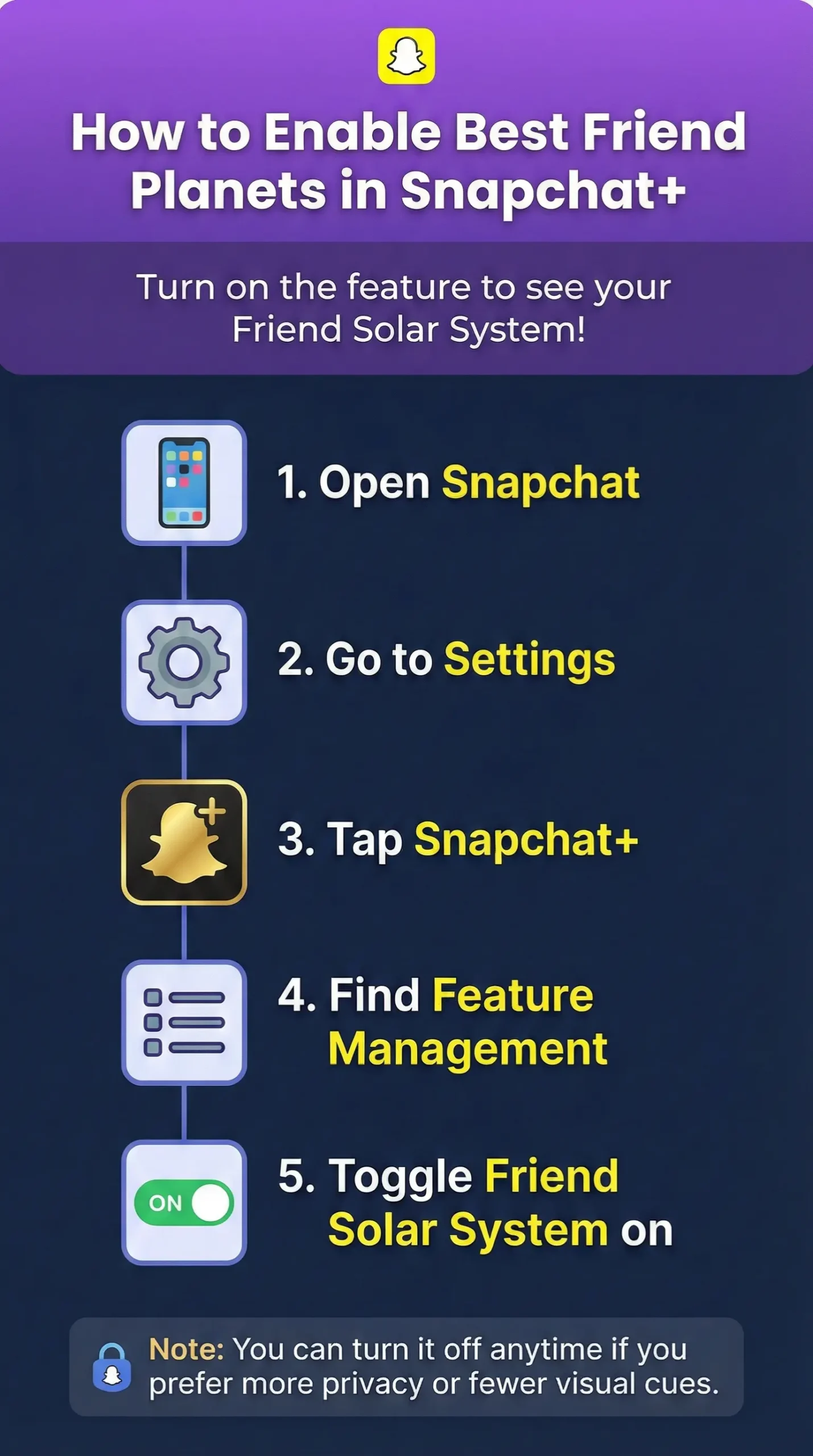
You can turn it off anytime if you prefer more privacy or fewer visual cues.
Also Read: How to Know If Someone Rewatched Your Snapchat Story – Snapchat+ Guide 2026
Why Snapchat Planet Rankings Change Over Time
One of the most misunderstood parts of the Snapchat Best Friend Planets Ranking is how often it changes.
Here’s why movement happens:
- Snapchat updates rankings in near real time
- Reduced activity can push a planet farther away
- New interactions with others can change positions
- Rankings tend to refresh weekly
A planet shift doesn’t mean someone cares less; it usually just means life got busy.
Privacy and What Others Can See
This is a big concern for many users.
- You cannot see someone else’s full solar system
- You only see your position in their system
- Your entire ranking remains private
So if you drop from Mercury to Venus, no one else sees that change, only you.
Also Read: Snapchat Planets In Order – How Friend Solar System and Snapchat+ Features Work
Common Misunderstandings About Snapchat Planets
| Misunderstanding | Reality |
|---|---|
| Planets mean emotional closeness | Planet positions reflect interaction frequency, not personal feelings or relationship depth. |
| Screenshots affect planet rankings | Taking screenshots has no impact on rankings or planet placement. |
| Snapchat assigns meaning to friendships | The system is fully algorithm-based and updates automatically from activity data. |
| Ranking changes are personal | Planet shifts usually happen due to activity changes, not relationship issues. |
Frequently Asked Questions
Final Summary
The Snapchat Best Friend Planets Ranking is a visual way to understand your most active connections on Snapchat+. It uses interaction data, not emotions, to place friends into a solar system that updates over time.
Planets change, badges shift, and rankings reset, but none of it defines the real value of your relationships. It simply reflects who you’re snapping the most at the moment. Once you understand how it works, the feature becomes a fun insight instead of something to overanalyze.